If you’re a man over 40 and you’ve got neck pain shooting into your shoulder or arm, you’re dealing with the classic symptoms of a pinched nerve in the neck — the everyday term for cervical radiculopathy.
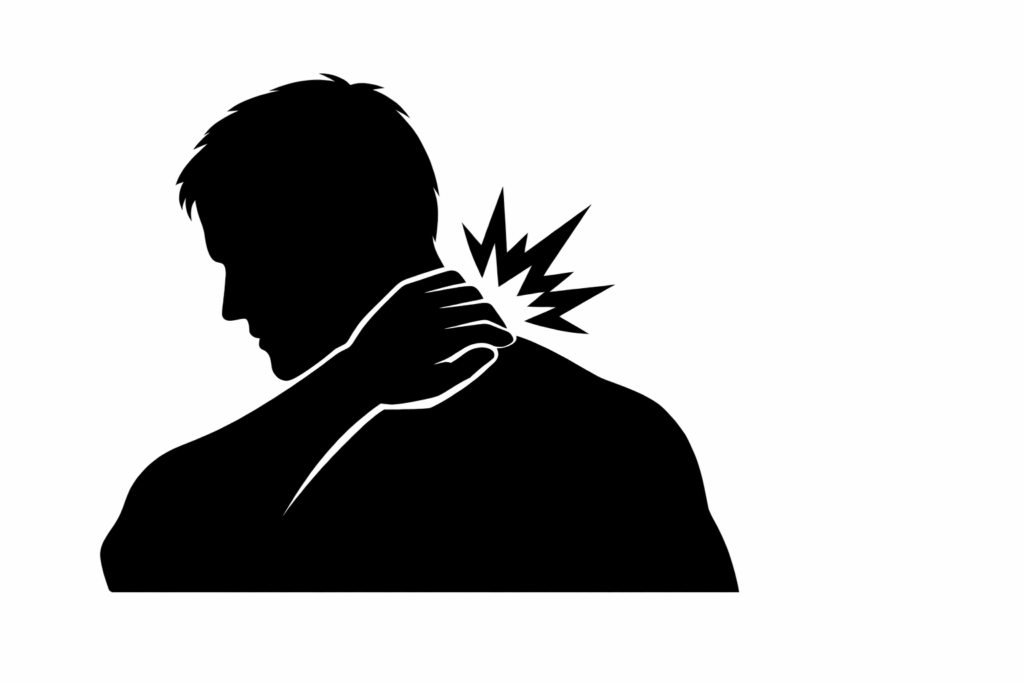
This guide breaks down the real symptoms, causes, and simple fixes in plain English, written for working men who don’t have time for medical jargon.
What a Pinched Nerve in the Neck Actually Is
A pinched nerve happens when the nerve roots in your neck get irritated or compressed as they exit the spine.
For men over 40, this usually comes from:
- Tight neck and trap muscles
- Forward‑head posture
- Stiff cervical joints
- Disc bulges
- Old injuries
- Years of stress and screen time
When the nerve gets crowded, the pain travels.
Symptoms of a Pinched Nerve in the Neck (Men Over 40)
These are the real‑world symptoms men describe — not the textbook version:
- Neck pain that shoots into the shoulder or arm
- Burning or electric pain down one side
- Tingling or numb fingers
- Weak grip or dropping objects
- Pain that worsens when you turn your head
- Relief when you rest your hand on top of your head
- A deep ache between the shoulder blade and spine
If the pain travels, it’s nerve‑related.
Symptoms Table:
| Symptom | What It Means | When to Get Checked |
| Shooting pain down arm | Nerve root irritation | If it worsens or spreads |
| Tingling/numb fingers | Sensory nerve compression | If numbness lasts > 48 hrs |
| Weak grip | Motor nerve involvement | Urgent if progressive |
| Pain between shoulder blade & spine | Muscle guarding around nerve | If pain becomes constant |
| Relief with hand on head | Classic cervical radiculopathy sign | Safe to monitor |
Causes of a Pinched Nerve in Men Over 40
- Forward‑head posture
- Tight traps and levator scapula
- Disc bulges
- Arthritis or bone spurs
- Long hours at a desk
- Heavy lifting with poor form
- Old whiplash or sports injuries
Why Men Over 40 Get This More Than Anyone Else
Because life tightens you up:
- More sitting
- More stress
- Less sleep
- More tension in the neck and shoulders
- 20+ years of micro‑injuries stacking up
Your neck becomes a pressure cooker. The nerve is the first thing to complain.
What Makes a Pinched Nerve Worse
These daily habits crank up nerve irritation:
- Looking down at your phone
- Long drives
- Sleeping with too many pillows
- Shrugging your shoulders when stressed
- Laptop that sits too low
- Heavy bench pressing with bad form
- Teeth grinding at night
Simple Fixes You Can Do Today
These reduce pressure — which is the real goal.
1. Chin‑Tuck Reset (10 seconds)
Pull your head straight back like you’re making a double chin. Hold 3 seconds. Repeat 10 times.
2. Shoulder Blade Squeezes
Pull shoulder blades down and back. Hold 5 seconds. Repeat 10 times.
3. Look‑Up Stretch
Lift your chest slightly and look up without crunching your neck.
4. Heat on the Shoulder Blade Area
Loosens the muscles that clamp down on the nerve.
When to See a Doctor
Get checked if you notice:
- Progressive weakness
- Trouble gripping objects
- Severe pain that doesn’t change with position
- Numbness that keeps spreading
Most cases improve with mechanics. But weakness = don’t wait.
FAQ
What are the symptoms of a pinched nerve in the neck in men over 40?
Neck pain that shoots into the shoulder or arm, tingling fingers, numbness, burning pain, and grip weakness.
Can a pinched nerve cause arm weakness?
Yes — that’s a sign the motor part of the nerve is involved.
How long does a pinched nerve take to heal?
Most improve in 2–6 weeks with posture resets and mobility work.
What makes a pinched nerve worse?
Looking down at your phone, long drives, stress, poor sleep, and forward‑head posture.
Can stress cause a pinched nerve?
Indirectly — stress tightens the traps and neck muscles, which increases nerve pressure.
Click here for further information about exercises for pinched neck nerves presented by Healthline.com.
This content is for general information only. It’s not medical advice, and it’s not a substitute for talking with a qualified health professional.