Most men assume testicle pain means something is wrong with the testicle itself.
But here’s the part no one tells men over 40:
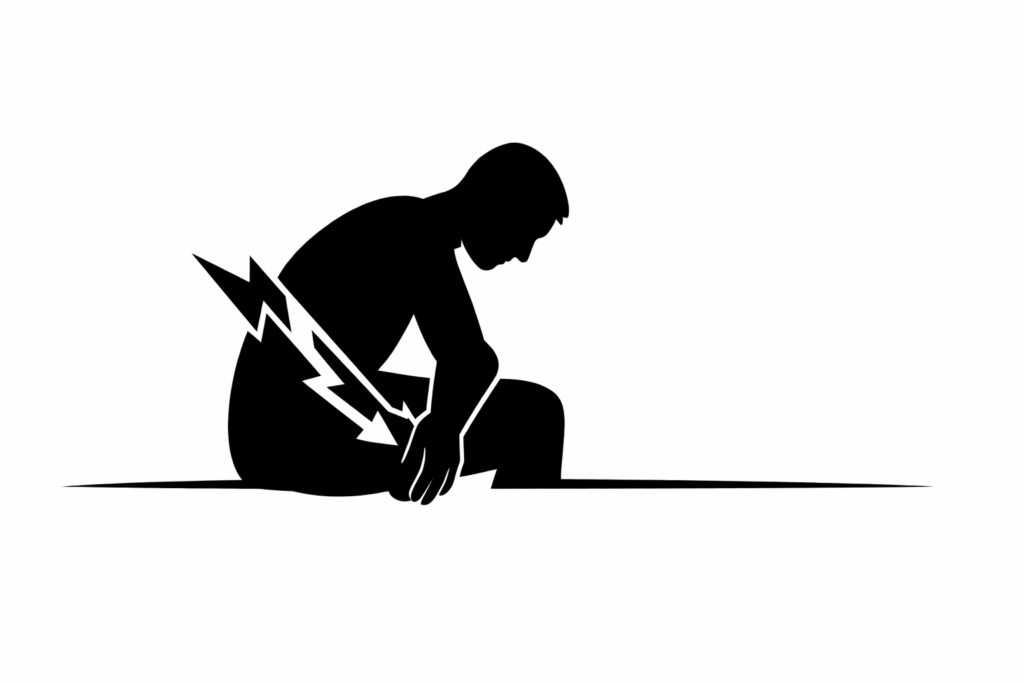
Groin pain that “shoots” into the testicle is usually a nerve problem — not a testicle problem.
And the reason it travels is because the groin, perineum, and testicle all share the same nerve pathway. When one part gets irritated, the whole line can light up.
This is why so many men feel:
- A tug in the groin
- A deep ache near the sit‑bone
- A burning or pulling sensation in the testicle
- Pressure in the perineum
- Pain when sitting
…all from the same underlying issue.
If you’ve ever felt pain “jump” from the groin into the testicle, this article explains exactly why.
The Nerve That Connects the Groin, Perineum, and Testicle
There’s one nerve that runs through every trouble spot men complain about after 40:
- Groin crease
- Perineum
- Scrotum
- Penis
- Testicle (partial sensory branch)
- Inner thigh
- Pelvic floor muscles
It’s the pudendal nerve, and it’s the reason pain can travel instead of staying in one place.
When this nerve gets irritated, compressed, or stretched, the brain can’t always pinpoint the exact source — so it sends pain signals to multiple locations along the same pathway.
This is called referred pain, and it’s extremely common in men.
If you want the full deep‑dive on this nerve, see our main guide: The Groin Nerve No One Talks About: Pudendal Nerve Pain in Men Over 40
Why the Pain “Moves” Instead of Staying Put
The pudendal nerve has three major branches:
- Rectal branch → anus, sit‑bone area
- Perineal branch → perineum, scrotum
- Dorsal branch → penis, part of the testicle
When one branch gets irritated, the others often echo the signal.
That’s why men feel:
Groin pain → then testicle ache → then perineum pressure
…even though nothing is actually wrong with the testicle.
This is the same reason men feel:
- Pain when sitting
- Relief when standing
- A “golf ball” feeling near the anus
- A tight or pulling sensation in the groin
- A dull ache in the testicle after long days
It’s all one nerve.
The 5 Most Common Reasons Groin Pain Radiates Into the Testicle
This is the #1 cause men never hear about.
When the pelvic floor gets tight, it clamps down on the pudendal nerve. That creates:
- Testicle ache
- Groin pulling
- Perineum pressure
- Pain after bowel movements
This is the same mechanism behind pelvic floor dysfunction — massively underdiagnosed in men over 40.
2. Sitting Too Long (Especially on Soft Chairs)
Soft chairs let the pelvis sink and twist. That stretches the nerve and irritates the branches under the sit‑bones.
Men feel:
- A dull ache in the testicle
- Burning in the groin
- Pressure in the perineum
If your pain improves when standing, this is a major clue.
3. Groin Strains or Old Sports Injuries
The inner thigh muscles share nerve connections with the pudendal nerve.
A strain here can refer pain upward into the testicle.
This is why men often say:
“It feels like I pulled something in my groin and now my testicle hurts.”
They’re connected.
When stool presses against the pelvic floor, the muscles tighten reflexively.
That tightening irritates the pudendal nerve.
This is why some men feel:
- Testicle pain after a bowel movement
- A deep ache near the anus
- Perineum pressure
It’s a nerve reflex — not a testicle issue.
5. Lower Back or Hip Issues
The pudendal nerve originates from the same spinal levels that control:
- Groin
- Testicle
- Pelvic floor
- Inner thigh
So when the lower back or hips are irritated, the nerve can fire pain into the testicle even though nothing is wrong “down there.”
The Pattern That Gives It Away
If your pain:
- Moves around
- Comes and goes
- Gets worse when sitting
- Improves when standing
- Shows up after a bowel movement
- Feels like a pulling or tight sensation
- Hits the groin and testicle at the same time
…then you’re dealing with a nerve pathway, not a testicle disease.
This is the pattern doctors often miss — but men feel every day.
Medical Disclaimer
This content is for general information only. It’s not medical advice, and it’s not a substitute for talking with a qualified health professional.