Short version: Shoulder blade pain in men over 40 is usually a mechanical or muscular problem, sometimes a nerve issue, and only rarely a heart or organ‑related warning sign. But because men often fear the worst, this guide breaks down the real causes in a clear, steady way.
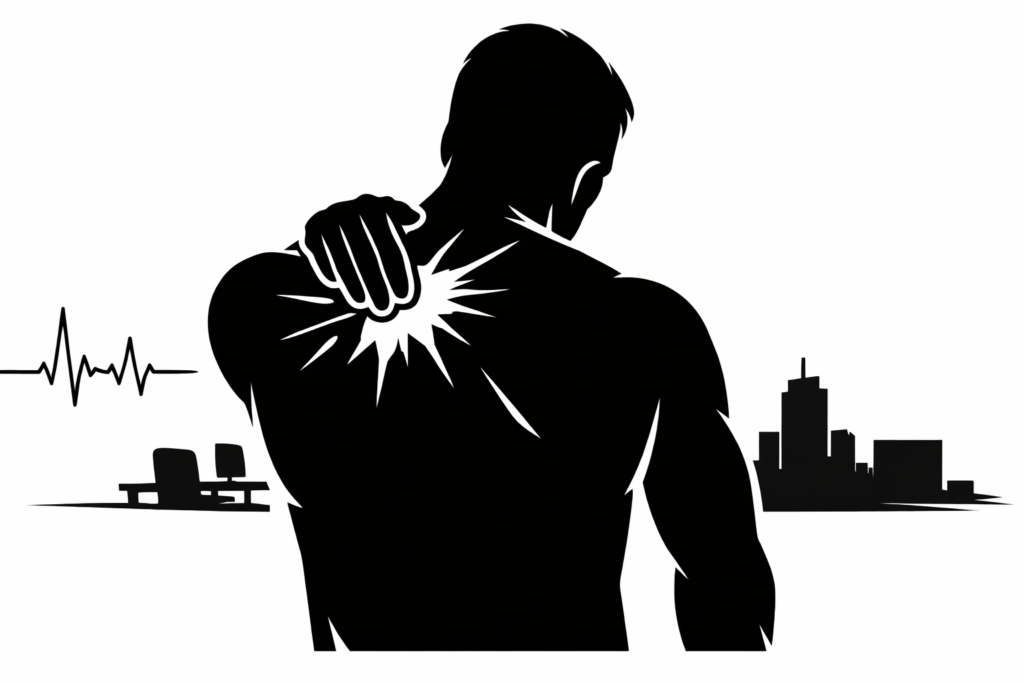
1. The 3 Most Common Causes (The Ones That Hit Men 40+)
A. Muscular Overload & Posture Strain (the #1 cause)
This is the everyday, boring, extremely common reason — especially for men who:
- Sit long hours
- Drive a lot
- Lift weights with tight pecs
- Work with arms forward (computers, tools, steering wheel)
What happens: The muscles between the spine and shoulder blade — the rhomboids, traps, levator scapulae — get tight, overworked, or irritated.
How it feels:
- Dull ache under the shoulder blade
- A knot you can’t quite reach
- Pain that gets worse at the end of the day
- Relief when you stretch or move
This accounts for the majority of shoulder blade pain in men over 40.
B. Nerve Irritation From the Neck or Upper Back
Men over 40 often have:
- Mild disc wear
- Stiff neck joints
- Forward‑head posture
- Old lifting injuries
These can irritate the C5–T1 nerve roots, which refer pain into the shoulder blade.
How it feels:
- Sharp, burning, or electric pain
- Pain that shoots into the arm or chest
- Tingling or numbness
- Pain triggered by turning the head
This is the second most common cause — and the one men often mistake for something dangerous.
C. Rib or Thoracic Joint Lock‑Up
The upper back has small joints between each rib and vertebra. When one gets stuck, irritated, or inflamed, it can create deep, pinpoint pain under the shoulder blade.
How it feels:
- Pain with a deep breath
- Pain when twisting
- A “stuck” feeling
- Sudden sharp pain after reaching or twisting
This is common in men who lift, swing tools, or sleep twisted on one side.
2. The Less Common Causes (Still Not Emergencies)
A. Gallbladder irritation
Rare, but possible. Usually felt on the right side, and often triggered by:
- Fatty meals
- Digestive upset
- Nausea or bloating
B. Stomach or esophageal irritation
Can refer pain to the mid‑back or shoulder blade area.
C. Lung irritation
More likely if you have:
- Persistent cough
- Fever
- Shortness of breath
- Recent illness
These are uncommon but worth knowing.
3. The Rare but Serious Causes (The Ones Men Fear)
Men over 40 often jump straight to:
- Heart attack
- Aortic issues
- Organ problems
Here’s the calm, factual breakdown:
A. Heart‑related pain
Heart‑related discomfort is usually:
- Pressure, heaviness, or squeezing
- In the chest, jaw, or left arm
- Triggered by exertion
- Paired with shortness of breath, nausea, or sweating
Shoulder blade pain alone is rarely the only symptom.
B. Aortic issues
These are extremely rare and usually come with:
- Sudden, severe tearing pain
- Pain in chest + back
- Feeling faint or weak
C. Internal organ referral
Possible but uncommon. Usually paired with digestive or breathing symptoms.
If pain is severe, sudden, or paired with chest pressure, shortness of breath, or dizziness, men should get checked immediately. (General medical safety guidance — not personalized advice.)
4. How to Tell What Type of Pain You Have
Most likely mechanical if:
- It gets worse with sitting
- It improves when you move
- You can “poke” the painful spot
- It feels like a knot
- It started after lifting, twisting, or sleeping wrong
More likely nerve‑related if:
- Pain shoots into the arm
- You feel tingling or numbness
- Turning your head triggers it
- You have neck stiffness
More likely rib/thoracic if:
- Pain increases with deep breathing
- Pain is sharp and localized
- Twisting makes it worse
More likely internal if:
- Pain is deep, vague, or spreading
- You feel sick, sweaty, or short of breath
- Pain doesn’t change with movement
- You have digestive symptoms
5. What Helps Most Men Over 40 (General Strategies)
These are general, non‑personalized strategies doctors often recommend for mechanical pain:
- Gentle movement and walking
- Heat to relax tight muscles
- Light stretching of the chest and upper back
- Improving posture during work
- Taking breaks from sitting
- Strengthening the mid‑back muscles
- Managing stress and breathing patterns
If pain is persistent, worsening, or concerning, a healthcare professional can help identify the cause.
6. When Men Should Get Checked
General red flags that doctors often consider important:
- Chest pressure or shortness of breath
- Pain that comes with exertion
- Sudden severe pain
- Pain with fever or cough
- Pain that doesn’t change with movement
- Pain that keeps worsening over days
Again — this is general information, not personalized medical advice.
7. The Bottom Line for Men Over 40
Most shoulder blade pain is:
- Mechanical
- Muscular
- Postural
- Or nerve‑related
And it improves with movement, posture changes, and time.
But because men over 40 often fear the worst, it’s smart to understand the signs that deserve attention — and the ones that don’t.
This content is for general information only. It’s not medical advice, and it’s not a substitute for talking with a qualified health professional.