The Hidden System Behind Pain, Pressure, Urination Problems, Sexual Issues, and Fatigue
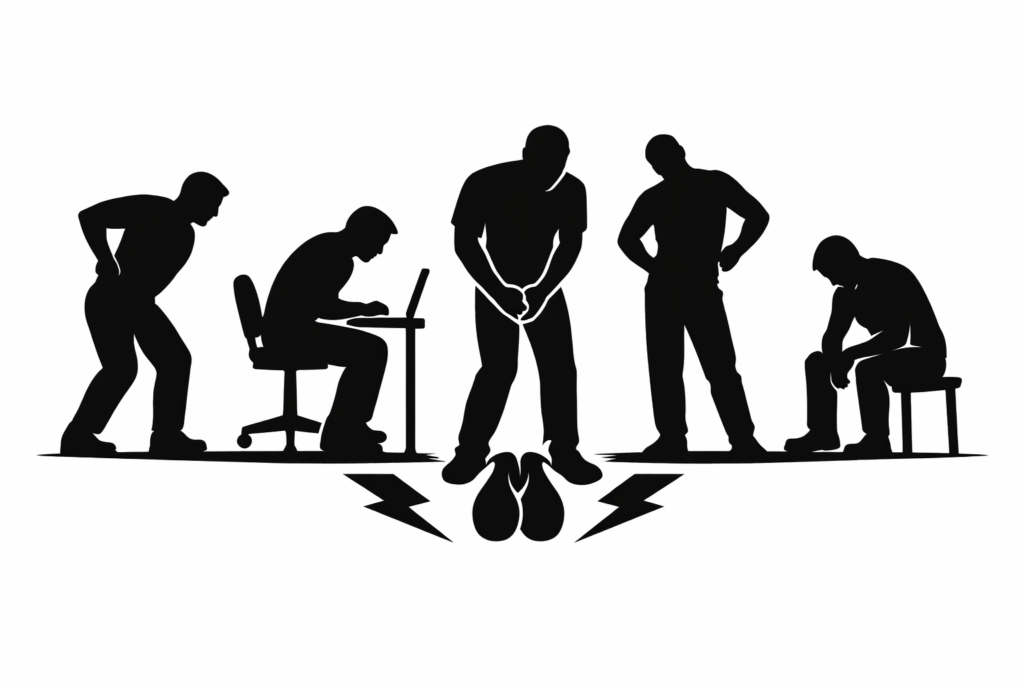
Men over 40 keep getting blindsided by the same set of problems:
- weak urine stream
- split stream
- testicle tightness
- groin pain
- painful ejaculation
- ED
- constipation
- hemorrhoids
- lower‑back stiffness
- hip pain
- “turtling” (penis retracting)
- pressure in the perineum
- numbness when sitting
- burning, aching, or “something isn’t right down there”
Doctors sometimes treat each one like a separate issue. But they’re not always separate.
They’re all often coming from one system nobody ever taught men about:
The Pelvic Floor.
And when it gets tight, weak, or irritated, it can wreck your life in slow motion.
This guide breaks it down in plain English, no medical fluff, no scare tactics — just the truth every man over 40 should’ve been told years ago.
1. What the Pelvic Floor Actually Is (Simple Version)
Forget the anatomy charts. Here’s the real explanation:
Your pelvic floor is the muscular “hammock” that holds up:
- your bladder
- your prostate
- your bowels
- your sexual plumbing
- your lower spine
It’s the control center for:
- urination
- bowel movements
- erections
- ejaculation
- core stability
- hip movement
- lower‑back support
If this system gets tight, weak, or irritated, everything downstream starts acting weird.
2. Why Men Over 40 Start Having Pelvic Floor Problems
Here’s the blunt truth:
Men over 40 sit too much, stress too much, clench too much, and move too little.
That’s the whole story.
The pelvic floor reacts to:
Sitting compresses the nerves and muscles that control the entire area.
B. Stress
Stress makes men clench their pelvic floor the same way they clench their jaw.
When the hips lock up, the pelvic floor takes the load.
D. Weak glutes
If your butt doesn’t do its job, the pelvic floor overworks.
Blood flow drops. Tissue stiffens. Nerves get irritated.
This is why men over 40 suddenly start noticing:
- weird pressure
- slow stream
- testicle pain
- “turtling”
- constipation
- hemorrhoids
- burning after sex
- numbness when sitting
It’s not random. It’s not “just aging.” It’s a system under pressure.
3. The 10 Most Common Pelvic Floor Symptoms in Men Over 40
2. Split or sideways urine stream
3. Testicle tightness or high‑riding testicle
4. Groin pain that shoots into the testicle
6. Erectile dysfunction that comes and goes
7. Penis retracting (“turtling”)
8. Pressure in the perineum (“between the balls and the butt”)
9. Constipation or trouble getting clean
10. Lower‑back stiffness in the morning
Every one of these has a pelvic‑floor connection.
4. The Nerve Pathways Men Never Hear About
Here’s the simple version:
Your pelvic floor is wired into 3 major nerves:
- Pudendal nerve (controls the penis, testicles, perineum)
- Ilioinguinal nerve (groin → testicle)
- Genitofemoral nerve (inner thigh → testicle)
When the pelvic floor gets tight, these nerves get irritated.
That’s why you feel:
- burning
- zapping
- aching
- pulling
- “something isn’t right”
And why groin pain often travels into the testicle — it’s literally the same nerve.
5. The 5 Pelvic Floor Patterns Every Man Over 40 Should Know
These are the patterns that explain 95% of symptoms:
Pattern 1: The Tight Pelvic Floor
Symptoms:
- testicle tightness
- painful ejaculation
- ED
- constipation
- pressure
Pattern 2: The Weak Pelvic Floor
Symptoms:
- dribbling
- slow stream
- trouble starting
- “I don’t feel empty”
Pattern 3: The Irritated Nerve Pattern
Symptoms:
- burning
- zapping
- groin → testicle pain
- numbness when sitting
Pattern 4: The Hip‑Lock Pattern
Symptoms:
- lower‑back stiffness
- hip flexor pain
- sciatica‑like symptoms
- pelvic pressure
Pattern 5: The Stress‑Clench Pattern
Symptoms:
- turtling
- tight perineum
- sudden ED
- “everything feels tight down there”
Men usually have 2–3 patterns at once.
6. What Actually Helps (General, Non‑Medical, Straight Talk)
This is where most men finally get relief.
Tight hips = tight pelvic floor.
B. Strengthen the glutes
Strong glutes take pressure off the pelvic floor.
C. Breathe lower, not higher
Chest breathing = pelvic tension. Belly breathing = pelvic release.
D. Fix the sitting problem
Break up long sitting. Stand more. Move more.
E. Calm the nervous system
Stress = clenching. Relaxation = release.
F. Gentle pelvic floor relaxation
Not Kegels. Men over 40 usually need the opposite.
7. The Mule‑Man Pelvic Floor Reset (Simple, Non‑Medical, Everyday Routine)
This is NOT medical treatment — just general movement and relaxation strategies men often find helpful.
Below are the step‑by‑step instructions for each part.
1. Hip Opener (60 seconds)
How to do it:
- Stand tall.
- Step one foot back like a short lunge.
- Keep your back heel lifted.
- Gently shift your weight forward until you feel a stretch in the front of your hip.
- Don’t crank it. Don’t force it.
- Hold 30 seconds each side. This loosens the hip flexors — the #1 driver of pelvic tension.
2. Glute Activation (30 seconds)
How to do it:
- Stand with feet shoulder‑width.
- Push your hips back slightly.
- Squeeze your glutes like you’re trying to crack a walnut.
- Hold 2 seconds, release, repeat for 30 seconds. This wakes up the muscles that should be doing the work instead of your pelvic floor.
3. Belly Breathing (10 slow breaths)
How to do it:
- Sit or stand tall.
- Put one hand on your belly.
- Inhale through your nose and let your belly expand outward.
- Exhale slowly and let everything soften.
- Keep your shoulders relaxed. This drops tension out of the pelvic floor instantly.
4. Gentle Pelvic Drop (20 seconds)
How to do it:
- Sit on the edge of a chair.
- Let your belly soften.
- Let your pelvic floor “hang” — no squeezing, no lifting.
- Imagine the area between your balls and your butt melting downward. This teaches the pelvic floor to relax instead of clench.
5. Walk for 2 minutes
How to do it:
- Just walk.
- Slow, normal pace.
- Let your arms swing. Movement resets the entire pelvic system better than anything else.
8. When to See a Doctor
If you have:
- severe pain
- blood in urine or stool
- sudden changes in sexual function
- fever
- swelling
- symptoms that worsen
A healthcare professional can help rule out serious causes.
This article is general information, not medical advice.
9. The Bottom Line for Men Over 40
Most men think their pelvic symptoms are random. Or embarrassing. Or “just getting older.”
They’re not.
They’re coming from a system that’s overloaded — and once you understand the patterns, everything finally makes sense.
This content is for general information only. It’s not medical advice, and it’s not a substitute for talking with a qualified health professional.