Most fitness advice isn’t written for you.
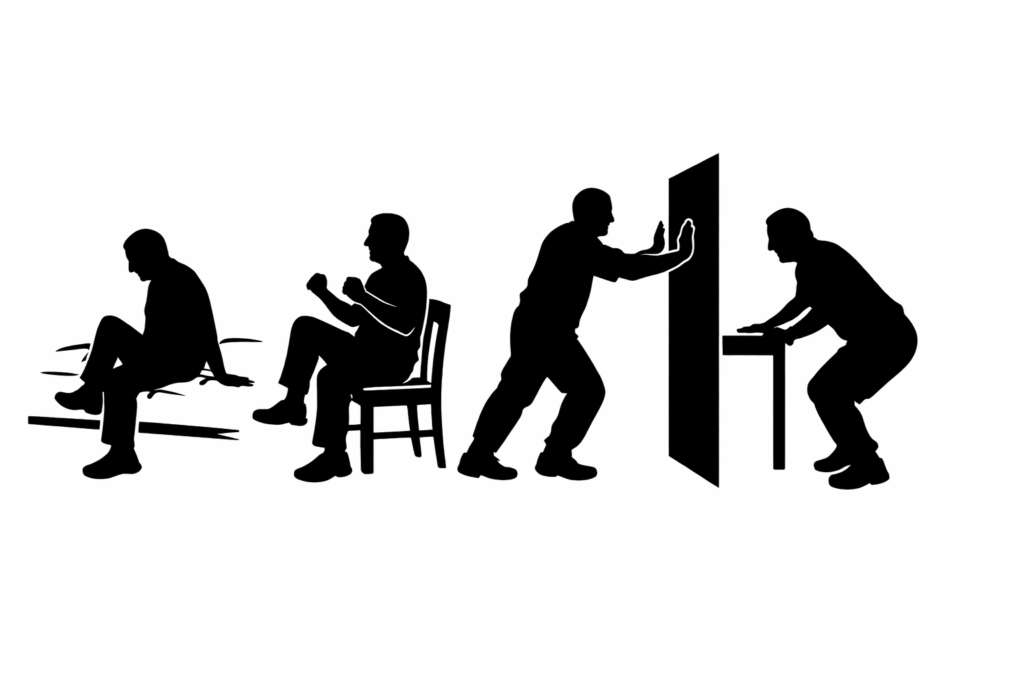
It’s written for men who can still get on the floor, bend their knees, balance on one leg, or walk a mile without their feet lighting up like fire.
But you — the man with swollen feet, stiff knees, a back that locks up, or legs that don’t move like they used to — you’re not done. You’re not broken. You’re not “too old.”
You just need a different starting point.
This guide is built specifically for older men who:
- can’t kneel
- can’t get on the floor
- can’t stand long
- have neuropathy
- have swollen feet or ankles
- have bad knees or bone‑on‑bone arthritis
- have a stiff, angry lower back
- have lost balance or confidence
This is the Mule Man path — slow, steady, unbreakable. You rebuild strength the same way you built your life: one honest rep at a time.
Why You Lost Strength — And Why You Can Still Get It Back
As men age, three things hit hard:
1. Muscles shrink from disuse
If you stop using a muscle, your body assumes you don’t need it. It downsizes it like a company cutting costs.
2. https://healthylivinglore.com/the-daily-mobility-loop/Joints stiffen from lack of movement
Stiff knees, stiff hips, stiff backs — they’re not “old age.” They’re immobility.
This is why feet swell, legs feel heavy, and balance fades.
The good news:
Every one of these can be improved — even in your 60s, 70s, and 80s.
You don’t need the floor. You don’t need weights. You don’t need to stand.
You just need consistent, low‑impact movement that wakes the body back up.
The Mule Man Rebuild Routine
(Chair + Bed + Wall + Zero‑Impact Strength) Do this 10–15 minutes a day. You’ll feel the difference in a week.
SECTION 1 — Bed Mobility (For Men Who Can’t Stand Safely Yet)
These movements reduce stiffness, improve circulation, and wake up the nervous system.
1. Ankle Pumps
How:
- Lie on your back.
- Point your toes forward, then pull them back toward your shins.
- Slow and steady. Reps: 20–30 each foot.
Why it helps:
- Reduces swollen feet
- Improves circulation
- Strengthens the muscles that prevent falls
2. Heel Slides
How:
- On your back, slowly slide one heel toward your butt.
- Stop before pain.
- Slide it back out. Reps: 10 each leg.
Why it helps:
- Lubricates stiff knees
- Restores hip mobility
- Reduces lower‑back tension
3. Pelvic Tilts
How:
- On your back, gently flatten your lower back into the bed.
- Hold 2 seconds.
- Release. Reps: 10–15.
Why it helps:
- Eases chronic back tightness
- Strengthens deep core muscles
- Improves posture and standing ability
4. Bed Marching
How:
- Lift one knee a few inches.
- Lower it.
- Switch sides. Reps: 20 total.
Why it helps:
- Rebuilds hip flexors
- Improves walking strength
- Wakes up balance reflexes
SECTION 2 — Chair Strength (For Men With Bad Knees or Balance Issues)
This is where most men should start.
1. Seated Marching
How:
- Sit tall.
- Lift one knee, then the other. Reps: 20–40.
Why it helps:
- Strengthens hips
- Improves circulation
- Reduces swollen feet
- Builds walking endurance
2. Seated Push‑Pull
How:
- Push your hands forward like a chest press.
- Pull your elbows back like you’re rowing. Reps: 15–20.
Why it helps:
- Strengthens chest, back, and shoulders
- Improves posture
- Reduces upper‑back stiffness
3. Seated Hip Hinge
How:
- Sit tall.
- Lean forward slightly from the hips.
- Sit back up. Reps: 10–15.
Why it helps:
- Rebuilds the hinge pattern
- Reduces lower‑back strain
- Prepares you for standing again
4. Seated Leg Extensions
How:
- Straighten one leg.
- Hold 1 second.
- Lower. Reps: 10–15 each leg.
Why it helps:
- Strengthens quads
- Supports bad knees
- Improves walking stability
5. Seated Calf Pumps
How:
- Press toes into the ground
- Lift heels
- Lower Reps: 20–30.
Why it helps:
- Reduces swelling
- Improves balance
- Strengthens the “push‑off” muscles for walking
SECTION 3 — Wall Work (For Men Who Can Stand, But Not Long)
1. Wall Pushups
How:
- Hands on wall
- Step back slightly
- Bend elbows
- Press away Reps: 10–20.
Why it helps:
- Builds upper‑body strength
- Improves shoulder stability
- Zero stress on knees or back
2. Wall Balance Taps
How:
- Stand with one hand lightly on the wall
- Tap one foot forward, side, back
- Switch legs Reps: 5 each direction.
Why it helps:
- Rebuilds balance
- Strengthens hips
- Improves fall‑prevention reflexes
3. Micro Wall Sit (Pain‑Free Range Only)
How:
- Back on wall
- Slide down 2–4 inches
- Hold 5–10 seconds Reps: 3–5.
Why it helps:
- Strengthens quads without bending knees deeply
- Builds confidence
- Improves standing endurance
SECTION 4 — Assisted Standing (Optional)
Only if safe.
1. Counter Step‑Backs
How:
- Hold counter
- Step one foot back
- Step forward
- Switch Reps: 10 each leg.
Why it helps:
- Improves gait
- Strengthens glutes
- Reduces back strain
2. Supported Mini‑Squats
How:
- Hold counter
- Bend knees 2–3 inches
- Stand tall Reps: 5–10.
Why it helps:
- Rebuilds leg strength
- Improves joint lubrication
- Zero impact
How to Use This Routine
If you can’t stand:
Do Bed + Chair.
If you can stand but not long:
Do Chair + Wall.
If you’re rebuilding confidence:
Add Assisted Standing.
Time needed:
10–15 minutes a day.
What you’ll feel in 14 days:
- less stiffness
- better balance
- stronger legs
- improved circulation
- reduced swelling
- more confidence standing and walking
This is how older men get their independence back — not with hero workouts, but with honest, consistent, Mule Man effort.
Final Mule Man Word
You’re not too old. You’re not too far gone. You’re not “past the point.”
You just need a starting point built for the body you have today — not the body you had at 40.
A Mule Man doesn’t quit. He adapts. He rebuilds. He rises when life gets heavy.
Start today. Ten minutes. That’s it.
Your strength is still in you — we’re just waking it back up.
Disclaimer
This content is for general information only. It’s not medical advice, and it’s not a substitute for talking with a qualified health professional.