A Mule‑Man Article
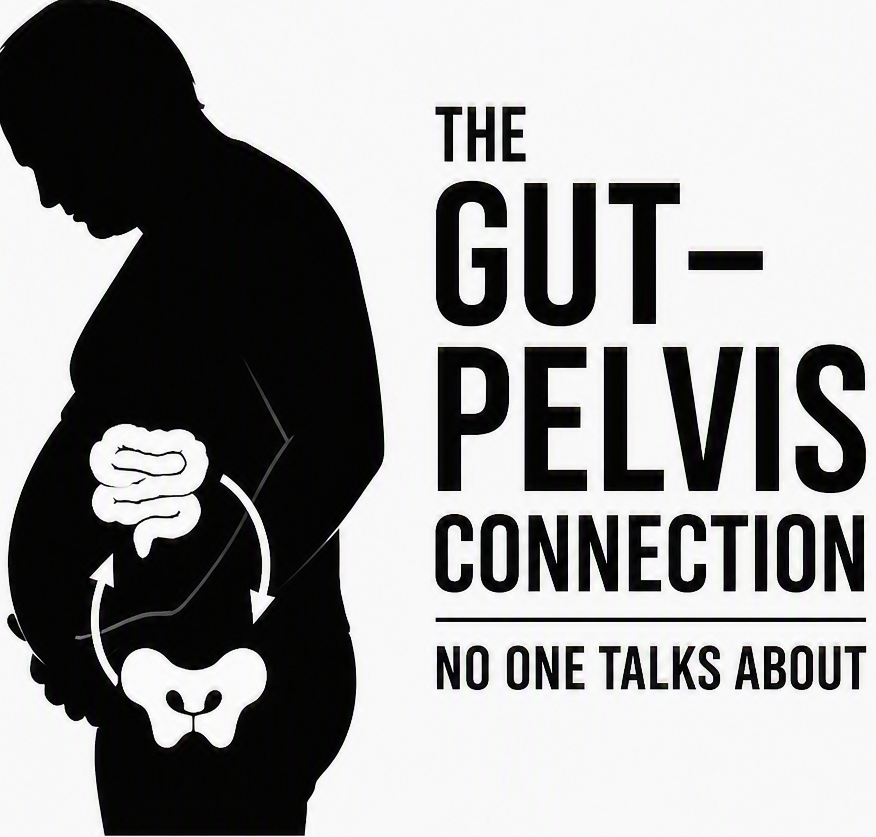
Men over 40 deal with gut issues, pelvic tightness, low back stiffness, and bathroom problems — often all at the same time. Most think these are separate issues. They’re not. The gut and pelvis are wired together like two ends of the same rope. When one gets tight, inflamed, or sluggish, the other reacts.
This connection explains bloating, constipation, diarrhea, pelvic pressure, urinary urgency, and even lower‑back pain. It’s the hidden system every working man needs to understand.
Below is the Mule‑Man breakdown — simple, direct, and built for men who want answers, not medical riddles.
🟤 1. Your Pelvic Floor Controls Gut Flow
The pelvic floor isn’t just about bladder control — it’s the “gatekeeper” of digestion. When these muscles tighten (from stress, sitting, or age), they clamp down on the rectum and lower colon.
What happens:
- Constipation
- Straining
- Bloating that won’t move
- Pressure in the lower belly
- Morning urgency
A tight pelvic floor can literally trap gas and stool, making gut symptoms worse.
🟤 2. Gut Inflammation Tightens the Pelvic Floor
Inflamed intestines send distress signals to the pelvic nerves. The pelvic floor responds by tightening — a protective reflex.
Result: Gut issues → pelvic tension Pelvic tension → worse gut issues
A vicious cycle men rarely recognize.
🟤 3. Sitting All Day Compresses Both Systems
Men over 40 often sit for hours — driving, working, relaxing. Sitting compresses the intestines and shortens the pelvic floor muscles.
This slows digestion, reduces blood flow, and creates the perfect storm for:
- Constipation
- Pelvic pain
- Lower‑back stiffness
- Gas trapping
Your chair is often the real culprit.
🟤 4. Stress Hits the Gut and Pelvis at the Same Time
Men carry stress in silence. When stress rises, the gut slows and the pelvic floor tightens. This double‑hit creates unpredictable digestion — loose one day, stuck the next.
Stress is the hidden switch that controls both systems.
🟤 5. Weak Core = Sluggish Gut + Overworked Pelvis
A weak core forces the pelvic floor to compensate. When the pelvis works overtime, it tightens. When it tightens, digestion slows.
This is why men with weak cores often have:
- Bloating
- Constipation
- Pelvic pressure
- Lower‑back pain
Strength fixes more than posture — it fixes digestion.
🟤 6. Gut Gas Can Trigger Pelvic Nerve Pain
Excess gas stretches the intestines. That stretch irritates nerves that run directly into the pelvis.
Men often mistake this for:
- Prostate pain
- Testicular discomfort
- Groin tightness
- Lower‑back ache
But the root cause is often gut pressure.
🟤 7. Pelvic Floor Dysfunction Mimics Gut Problems
When the pelvic floor is too tight, men feel:
- Urgency
- Incomplete emptying
- Pressure
- “Blocked” digestion
Many think it’s IBS — but it’s pelvic mechanics.
🟩 The Mule‑Man Fix: The Gut–Pelvis Reset
A simple daily rhythm that restores both systems:
- 3–5 minutes of pelvic stretching (child’s pose, deep squat hold)
- Slow breathing before meals to relax pelvic nerves
- Core activation (dead bugs, planks)
- Standing breaks every 45–60 minutes
- Gentle belly massage to move gas and reduce pelvic tension
- Avoid heavy meals late at night
This is the Mule‑Man way: simple, steady, effective.
Stay steady. Stay strong. Stay useful.
🟦 Quick Q&A for Men Over 40
Q: Can pelvic tension really cause gut symptoms? A: Yes — the nerves and muscles overlap. A tight pelvic floor slows digestion and traps gas.
Q: Why does sitting make everything worse? A: It compresses the intestines and shortens pelvic muscles, slowing motility.
Q: Is this the same as prostate issues? A: Not always. Pelvic floor dysfunction often mimics prostate symptoms.
Q: Can exercise fix the gut–pelvis connection? A: Yes — core strength and mobility directly improve both systems.
⚠ Disclaimer
This article is for general informational purposes only and is not medical advice. Men with persistent or severe digestive or pelvic symptoms should consult a qualified healthcare professional for evaluation and personalized guidance.