Separating real decline from hype and fear
Every man over 40 hears the same line:
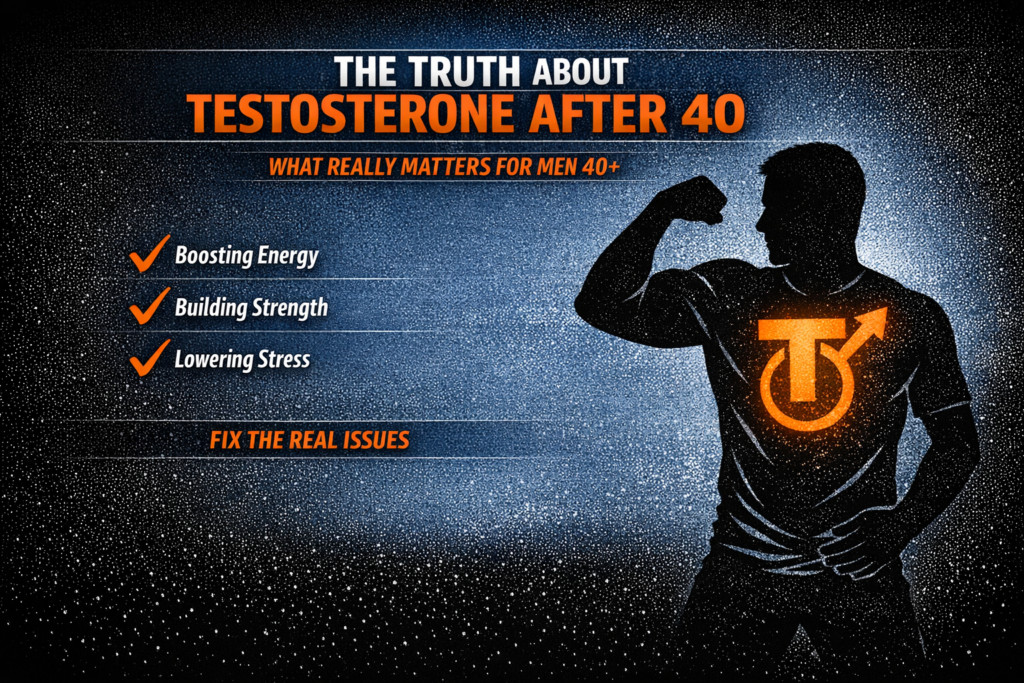
But the truth is more nuanced.
Testosterone does decline with age, yes — but not every man needs a supplement, and not every symptom is hormonal.
What Actually Happens
After 40, testosterone levels fall about 1% per year on average.
That’s normal.
The problem isn’t the number — it’s how your body responds to that change.
Low energy, poor sleep, belly fat, and irritability often come from stress, poor recovery, and inflammation, not just hormones.
The Real Triggers of Low T
- Chronic stress — cortisol blocks testosterone production.
- Poor sleep — most testosterone is made during deep sleep.
- Excess belly fat — fat tissue converts testosterone into estrogen.
- Sedentary lifestyle — movement signals your body to keep producing.
- Alcohol and processed food — both disrupt hormone balance.
What Actually Helps
- Strength Training
Lifting weights or doing resistance work 3–4 times a week sends a clear signal: - Sleep and Recovery
Deep sleep is your natural hormone therapy.
No supplement can replace it. - Stress Mastery
Men who learn to calm their nervous system — through breathing, walking, or mobility — protect their testosterone better than men chasing pills. - Nutrition
Zinc, magnesium, and healthy fats (olive oil, avocado, eggs) support hormone production.
You don’t need exotic powders — just real food.
When to Get Checked
If you notice:
- persistent fatigue
- loss of motivation
- low libido
- muscle loss despite training
…then it’s worth getting a morning blood test to see your baseline.
But remember — numbers don’t tell the whole story.
Symptoms and lifestyle matter just as much.
Bottom Line
Testosterone after 40 isn’t a crisis — it’s a signal.
Your body’s asking for better sleep, movement, and recovery.
Fix those first, and your hormones often follow.
This content is for general information only. It’s not medical advice, and it’s not a substitute for talking with a qualified health professional.