Most men hit 50 and think back pain is “just age.” It’s not.
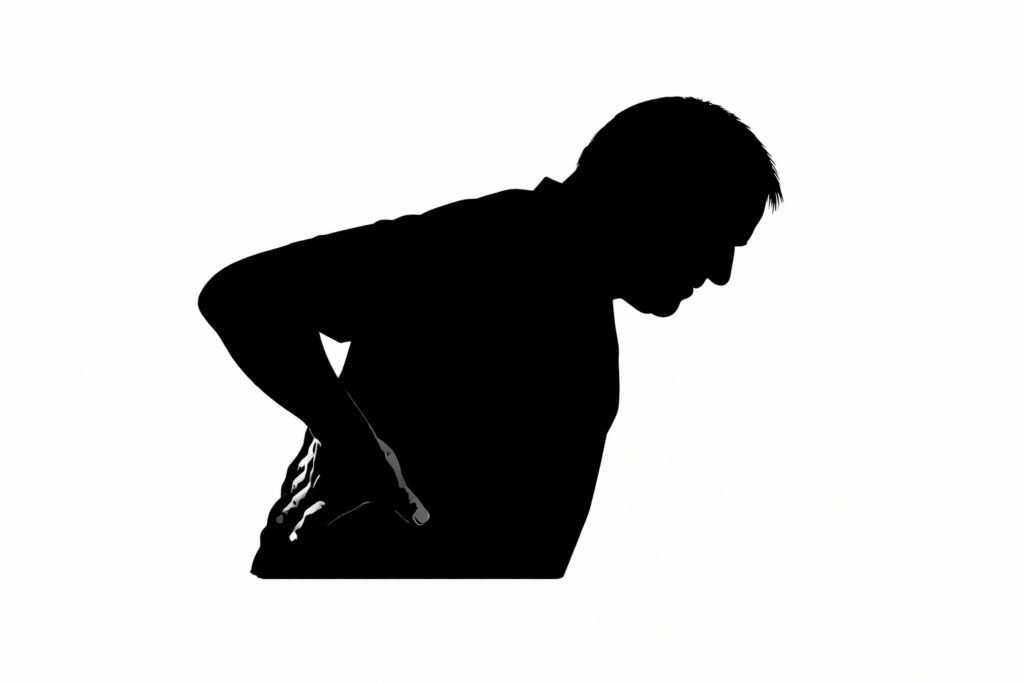
Back pain after 50 follows predictable patterns, and once you understand which one you’re in, you can fix it faster and stop guessing.
This guide breaks down:
- Why back pain changes after 50
- The 5 pain patterns men fall into
- What’s actually happening inside your spine
- What helps (and what doesn’t)
- When pain is a red flag
Let’s get into it.
Why Back Pain Changes After 50
Your 40s are dominated by muscle and mobility problems — tight hips, weak glutes, too much sitting, stress, and poor movement patterns.
Your 50s are different.
This is the decade where structure starts to matter:
- Discs dry out
- Joints wear down
- Nerves get crowded
- Bone density drops
- Recovery slows
None of this means you’re “falling apart.” It means your back is asking for smarter inputs, not harder ones.
The 5 Back‑Pain Patterns in Men Over 50
These patterns show up over and over. Find your pattern and you’ll know what to do next.
Pattern 1 — The Stiff‑Spine Morning Pain
You wake up tight, sore, and slow. It takes 10–30 minutes to “loosen up.”
What’s happening: Your discs lose water overnight. Arthritis in the facet joints adds stiffness. Your spine simply needs movement to “wake up.”
Feels like:
- Deep ache across the low back
- Stiffness bending forward
- Pain that improves after moving around
What helps:
- Gentle morning mobility (not stretching cold)
- Walking before sitting
- Heat + movement, not ice
- Strengthening the glutes and core
Pattern 2 — The Standing/Walking Pain (Stenosis Pattern)
You can walk for a bit… then your back or legs start hurting. You sit down or lean forward, and the pain eases.
What’s happening: The spinal canal narrows with age (stenosis). Standing compresses nerves. Leaning forward opens the space.
Feels like:
- Back pain when upright
- Leg heaviness or burning
- Relief when sitting or bending forward
What helps:
- Forward‑flexion mobility
- Hip mobility
- Core endurance
- Avoiding long static standing
Pattern 3 — The One‑Sided Joint Pain Pattern
Pain sits on one side of your spine, usually near the beltline.
What’s happening: Facet joints (the small joints in your spine) get arthritic and inflamed. They hate extension and rotation.
Feels like:
- Sharp pain leaning backward
- Pain turning or twisting
- Localized ache, not shooting down the leg
What helps:
- Avoiding repeated extension
- Hip mobility
- Anti‑rotation core work
- Short‑term heat
Pattern 4 — The Back + Leg Combo Pattern
Back pain plus:
- Numbness
- Tingling
- Burning
- Pain down the leg
What’s happening: A disc bulge, stenosis, or vertebra slippage (spondylolisthesis) is irritating a nerve.
Feels like:
- Pain that travels
- Worse with standing or sitting too long
- Relief when changing positions
What helps:
- Nerve‑glide exercises
- Core stability
- Reducing inflammation
- Avoiding long static positions
Pattern 5 — The Sudden Sharp Pain Pattern
You bend, twist, or lift — and boom — sharp pain that stops you cold.
What’s happening: Could be a muscle spasm… But in men over 50, it can also be a compression fracture, especially if testosterone is low or bone density is declining.
Feels like:
- Sudden, severe pain
- Pain with standing
- Pain that doesn’t improve with movement
What helps:
- Immediate rest
- Medical evaluation if pain is severe or persistent
- Bone density check if you’ve never had one
What’s Actually Causing the Pain (The Age‑Related Breakdown)
Here’s the real list — not the generic “muscle strain” nonsense.
1. Disc Degeneration
Discs dry out and thin. This reduces shock absorption and increases stiffness.
2. Facet Joint Arthritis
Cartilage wears down. Joints get inflamed. This causes one‑sided pain.
3. Spinal Stenosis
The canal narrows. Nerves get crowded. Standing becomes uncomfortable.
4. Spondylolisthesis
A vertebra slips forward. This irritates nerves and tightens hamstrings.
5. Bone Density Loss
Men lose bone density too — especially with low T. This increases fracture risk.
Poor sleep increases inflammation. Stress tightens the back muscles and amplifies pain signals.
What Helps Men Over 50 the Most
These are the interventions that consistently move the needle.
1. Daily Movement (Not “Exercise”)
Your spine hates stillness. Walking, mobility, and light strength work beat any fancy program.
2. Core Endurance, Not Crunches
Men over 50 need planks, carries, anti‑rotation work, and glute strength.
This unloads the spine.
3. Hip Mobility
Tight hips force your spine to do all the work. Loosen the hips, and the back calms down.
4. Reduce Long Sitting or Standing
Your spine wants variety, not perfection.
5. Heat in the Morning, Ice Only for Acute Injury
Heat + movement is the winning combo for stiffness.
6. Strength Training (Smart, Not Max‑Effort)
You don’t need PRs. You need control, stability, and consistency.
7. Medical Tools When Needed
For stubborn cases:
- Physical therapy
- Facet injections
- Epidurals
- Radiofrequency ablation
These aren’t signs of weakness — they’re tools.
When to Worry (Red Flags)
Get checked if you have:
- Pain with fever
- Pain after a fall
- Sudden severe pain that doesn’t improve
- Numbness in the groin
- Loss of bowel/bladder control
- Unexplained weight loss
These are rare but important.
The Bottom Line
Back pain after 50 isn’t random. It follows patterns. Once you know your pattern, you can fix the root cause instead of chasing symptoms.
Your spine isn’t failing — it’s adapting. Give it the right inputs, and it will respond.
Disclaimer
This content is for general information only. It’s not medical advice, and it’s not a substitute for talking with a qualified health professional.