How Digital Strain Steals Your Energy
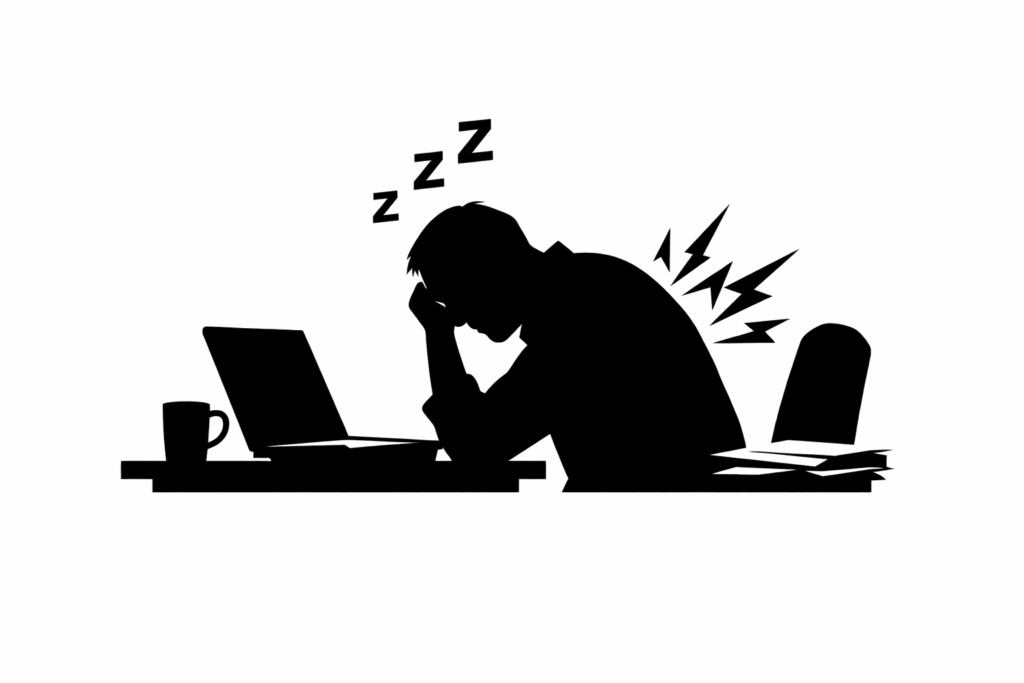
If you work with screens all day, your exhaustion isn’t just “being tired.” It’s a real physiological drain — and it hits men over 40 harder than anyone else.
Screen fatigue is a mix of eye strain, nervous‑system overload, posture collapse, and micro‑stress that builds hour after hour. By the time you get home, your brain feels cooked, your eyes feel gritty, and your energy is gone.
This isn’t weakness. It’s biology.
Why Screens Drain Men’s Energy So Fast
1. Your eyes are doing heavy labor
Every second you’re looking at a screen, your eyes are performing micro‑adjustments to focus on tiny text, bright light, and fast‑moving content. This burns through ocular muscles, increases eye pressure, and forces your brain to work harder to interpret what you’re seeing.
2. Blue light hits your brain like a stimulant
Blue light tells your brain: “Stay alert. Don’t relax. Don’t produce melatonin.” So even when you’re mentally tired, your nervous system stays wired.
3. Your neck and traps carry the load
Screen posture pulls your head forward 2–4 inches. That adds 20–40 extra pounds of force on your neck and upper back. Your body burns energy just trying to hold your head up.
4. Your nervous system never gets a break
Notifications, tabs, emails, Slack, texts — every ping is a micro‑stress. Your brain stays in low‑grade fight‑or‑flight, which drains energy and shortens your fuse.
5. Your breathing gets shallow
Screens make men breathe from the upper chest instead of the diaphragm. Shallow breathing = less oxygen = less energy.
The Symptoms Most Men Ignore
- Burning or gritty eyes
- Afternoon headaches
- Neck tightness
- Feeling “fried” after work
- Trouble winding down at night
- Low motivation after 6 PM
- Irritability with family
- Poor sleep even when tired
This is screen fatigue — not laziness, not aging.
The Fix: The Mule Man Screen Reset
This is the routine that resets your eyes, posture, and nervous system in under 3 minutes.
1. The 20‑20‑20 Eye Reset (30 seconds)
Every 20 minutes, look 20 feet away for 20 seconds. This relaxes the eye muscles and resets focus.
2. The Neck‑Back Decompression (45 seconds)
- Sit tall
- Pull chin straight back
- Lift chest
- Roll shoulders down and back
This reverses screen posture instantly.
3. The Nervous System Downshift (30 seconds)
Slow inhale through the nose for 4 Hold for 2 Long exhale for 6
This shuts off the stress response.
4. The Blink Reset (10 seconds)
Blink rapidly for 10 seconds. Screens cut your blink rate in half — this rehydrates the eyes.
The End‑of‑Day Screen Detox (2 minutes)
Do this before leaving work or shutting down for the night:
- Turn off overhead lights
- Dim your screen
- Do 10 slow breaths
- Look out a window or at a distant object
- Stretch your chest and hip flexors
This signals your brain: “Work is over. Shift into recovery mode.”
When to See a Professional
If you have:
- Persistent headaches
- Blurry vision
- Eye pain
- Neck pain that doesn’t improve
- Trouble sleeping for weeks
Get checked by an eye doctor or primary care provider. Screen fatigue is common, but it shouldn’t be ignored.
Bottom Line
Screen fatigue is real. It drains your energy, tightens your body, and fries your nervous system — especially for men who grind through long days.
But with a few simple resets, you can reclaim your focus, your energy, and your evenings.
This content is for general information only. It’s not medical advice, and it’s not a substitute for talking with a qualified health professional.