The quiet, stubborn, everyday strength that never leaves a real man.
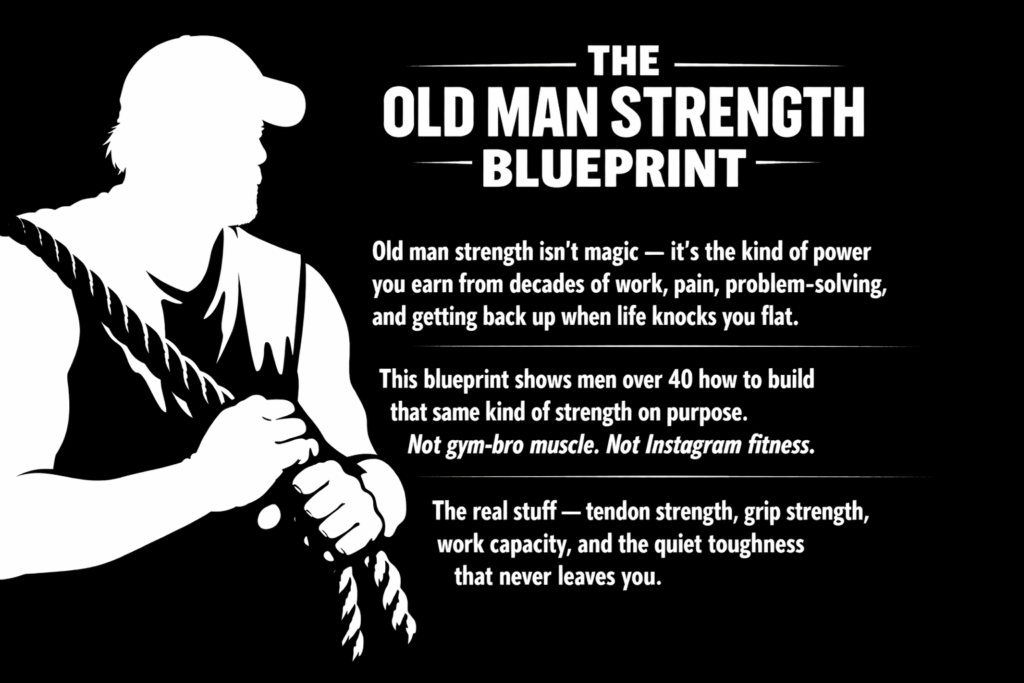
There’s a kind of strength younger men don’t understand. It’s not gym strength. It’s not bodybuilding strength. It’s not “look at me” strength.
It’s Old Man Strength — the kind of strength that comes from:
- decades of work
- grit
- problem‑solving
- stubbornness
- pain tolerance
- real‑world experience
It’s the strength that lets a 58‑year‑old man out‑grip a 25‑year‑old who benches 300. It’s the strength that comes from life — not workouts.
And here’s the truth:
You can keep Old Man Strength deep into your 70s if you understand what builds it and what kills it.
This is the blueprint.
1. Old Man Strength Comes From Grip — Not Muscles
Grip is the foundation of real‑world strength.
You can’t:
- lift
- carry
- pull
- twist
- fix
- build
…without grip.
Men over 50 naturally have stronger grip because they’ve used their hands for decades.
But grip fades fast if you stop using it.
How to keep it (no equipment):
- carry groceries in one trip
- open jars instead of asking for help
- squeeze a tennis ball
- use your hands daily
Grip is the last strength to leave a man — if he keeps using it.
2. Old Man Strength Comes From Tendons, Not Muscles
Younger men build muscle. Older men build tendon strength — the deep, rope‑like strength that doesn’t show but never quits.
Tendons get stronger from:
- slow, steady effort
- carrying things
- pushing
- pulling
- daily tasks
This is why older men can:
- hold a heavy object longer
- twist a wrench harder
- stay strong under pressure
Tendon strength is “quiet strength.”
You keep it by using it, not by lifting weights.
3. Old Man Strength Comes From Pain Tolerance
Younger men quit when something hurts. Older men have lived through:
- injuries
- long days
- hard work
- stress
- responsibility
Pain from hard work and long days doesn’t scare them.
This doesn’t mean ignoring injuries — it means you know the difference between hurt and harm. Always seek medical advice for injuries.
Pain tolerance is a form of strength.
4. Old Man Strength Comes From Leverage and Technique
Older men know how to:
- lift with angles
- use body weight
- brace properly
- position their feet
- use momentum
- conserve energy
This is why a 60‑year‑old can move a refrigerator while a 25‑year‑old struggles.
Technique beats muscle every time.
5. Old Man Strength Comes From Daily Movement, Not Workouts
You don’t need a gym. You don’t need equipment. You don’t need programs.
- bending
- twisting
- carrying
- reaching
- standing
- walking
- fixing
- building
This is the movement older men used to get naturally from life.
You keep Old Man Strength by living, not by training.
6. Old Man Strength Comes From Staying Useful
A man who stays useful stays strong.
When you:
- help someone
- fix something
- carry something
- solve a problem
- stay involved
…you stay physically and mentally sharp.
Usefulness is strength.
7. Old Man Strength Dies When a Man Stops Moving
The fastest way to lose Old Man Strength is to:
- sit too much
- avoid tasks
- stop using your hands
- stop carrying things
- stop bending and twisting
- stop being useful
Strength fades when life gets too comfortable.
You don’t need workouts — you need movement with purpose.
8. Old Man Strength Grows When a Man Has Purpose
Purpose makes a man:
- stand taller
- move more
- stay engaged
- stay sharp
- stay alive
A man with purpose has strength younger men can’t understand.
Purpose is fuel.
The Forgotten Men Bottom Line
Old Man Strength isn’t about:
- gyms
- workouts
- supplements
- perfect routines
It’s about:
- grip
- tendons
- technique
- pain tolerance
- daily movement
- usefulness
- purpose
You don’t lose Old Man Strength because you age. You lose it because you stop living the way men were built to live.
Keep using your body. Keep using your hands. Keep solving problems. Keep being useful. Keep moving with purpose.
Do that, and you’ll stay strong long after younger men burn out.
*Always seek medical advice when changing you diet or exercise routine
This content is for general information only. It’s not medical advice, and it’s not a substitute for talking with a qualified health professional.