Most men don’t notice it at first. You’re standing at the toilet one morning and think:
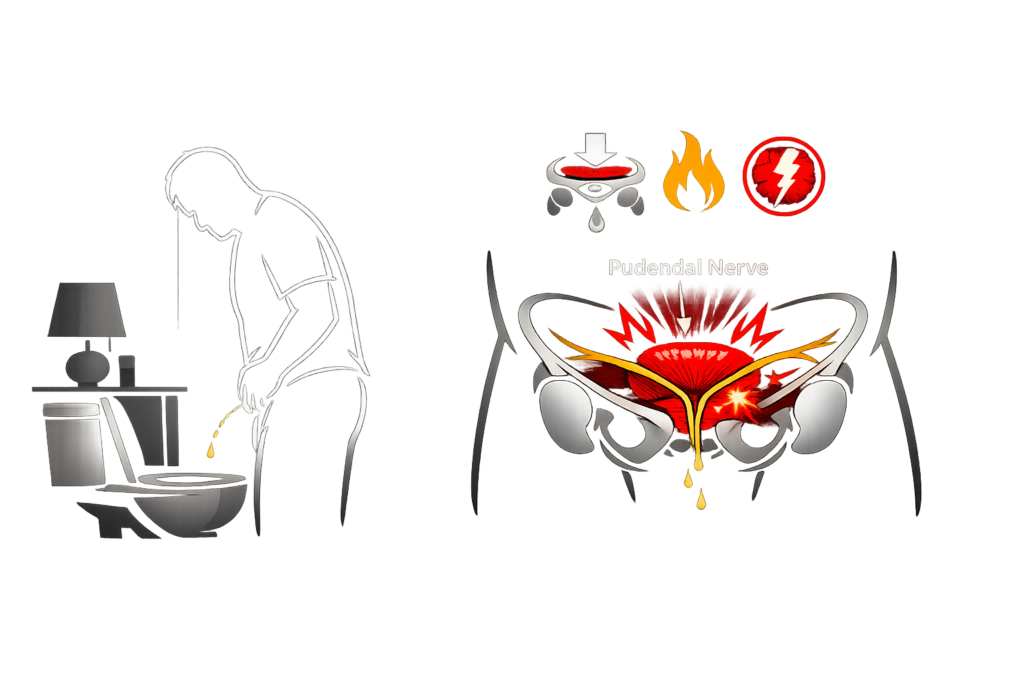
“Huh… that’s not the firehose it used to be.”
Then over months or years:
- The stream gets slower
- You have to push harder
- It takes longer to start
- You dribble afterward
- You feel like you didn’t empty fully
This is one of the most common problems men over 40 face — and one of the least talked about.
Let’s break it down Mule Men style: simple, honest, and built to help you fix it.
What a Weak Stream Actually Means
A weak urine stream usually comes from one of three things:
- The prostate is pressing on the urethra
- The pelvic floor is too tight
- The bladder muscles are getting tired or irritated
Most men assume it’s “just the prostate,” but that’s only part of the story.
Why It Happens More After 40
1. The Prostate Slowly Grows
This is normal. It’s called BPH (benign prostatic hyperplasia) — not cancer, not dangerous, just annoying.
As it grows, it squeezes the urethra like a kink in a hose.
2. The Pelvic Floor Gets Tight
Men over 40 carry stress in their hips, groin, and lower back. Years of sitting, clenching, and tension create a tight pelvic floor.
- Makes it hard to start urinating
- Weakens the stream
- Causes dribbling
- Makes you feel “not empty”
Most men have no idea this is happening.
3. The Bladder Gets Irritated
Caffeine, alcohol, dehydration, and stress all irritate the bladder lining.
An irritated bladder:
- Contracts too early
- Contracts too weakly
- Sends false “need to pee” signals
This leads to frequent urination and a weak stream.
4. Blood Flow Declines
Less blood flow = weaker bladder muscles and slower nerve signals.
Sitting all day is the biggest culprit.
The Symptoms Men Notice
A weak stream often comes with:
- Hesitation (takes a while to start)
- Dribbling at the end
- Feeling like you didn’t empty fully
- Peeing more often
- Peeing at night
- Needing to push or strain
- Split stream
- Sudden urgency
These symptoms can be annoying — but they’re also fixable.
The Real Causes No One Tells Men
1. Pelvic Floor Dysfunction
This is the hidden cause behind thousands of “prostate problems.”
A tight pelvic floor can mimic:
- Prostate enlargement
- Prostatitis
- Bladder issues
If you clench your jaw when stressed, you probably clench your pelvic floor too.
Belly fat, poor sleep, stress, and processed foods all increase inflammation.
Inflammation irritates the bladder and prostate.
3. Dehydration
When you don’t drink enough water:
- Urine becomes concentrated
- The bladder gets irritated
- The prostate gets inflamed
- The stream weakens
Ironically, men drink less water because they’re already peeing too often — which makes the problem worse.
4. Nerve Slowdown
The nerves that control the bladder and pelvic floor run through the lower back.
Back stiffness = slower nerve signals = weaker stream.
What Actually Helps (The Mule Men Fix)
Use it before and during urination.
It relaxes the pelvic floor so the stream can start strong.
2. The “No Push” Rule
Never strain to pee. Straining tightens the pelvic floor and makes the problem worse.
If the stream won’t start:
- Breathe down
- Relax your belly
- Wiggle your hips
- Try again
3. Hydrate Like a Man, Not a Camel
Drink water steadily through the day — not all at once.
A good rule:
- 8–12 oz every 2–3 hours
- Less in the evening if nighttime urination is an issue
4. Heat to the Groin
Warmth relaxes the pelvic floor and improves blood flow.
- Warm shower
- Heating pad on the lower belly
- Warm bath
10 minutes can make a big difference.
5. Reduce Bladder Irritants
Common triggers:
- Coffee
- Energy drinks
- Alcohol
- Carbonated drinks
- Artificial sweeteners
- Spicy foods
Cutting these for 7–14 days often improves the stream noticeably.
6. Move More
Even 5 minutes of walking every hour improves blood flow to the bladder and prostate.
7. Strengthen the Lower Back
A stiff lower back slows the nerves that control urination.
Simple daily moves help:
- Cat‑cow
- Pelvic tilts
- Gentle hip circles
When to See a Doctor
Men should get checked if:
- There’s blood in the urine
- Pain or burning
- Fever
- Sudden inability to urinate
- Stream becomes extremely weak
- Symptoms worsen quickly
Doctors may consider options depending on the situation, including medications or other treatments.
The Mule Men Bottom Line
A weak urine stream after 40 is common — but it’s not something you have to accept.
The real keys are:
- Relax the pelvic floor
- Improve blood flow
- Reduce inflammation
- Stop straining
- Support the bladder and prostate
Most men can improve their stream dramatically with simple daily habits.
You’re not falling apart — your body is just asking for better maintenance.
This content is for general information only. It’s not medical advice, and it’s not a substitute for talking with a qualified health professional.